A New White Paper
The Financial Playbook
for Baseball Families
Navigating travel ball, NIL, the draft, and the new economics of the game — a financial roadmap, not a scouting guide.

Navigating travel ball, NIL, the draft, and the new economics of the game — a financial roadmap, not a scouting guide.
2026 is the most financially turbulent year in the history of amateur baseball, and almost no resource exists to help families plan through it. Three regulatory shocks — a proposed overhaul of the MLB draft, a landmark NCAA settlement rewriting college scholarship math, and a federal executive order reshaping transfer and eligibility rules — are converging on the same players and families at once, each changing the financial calculus independent of a player's talent.
This paper is a financial roadmap, not a scouting guide. It follows the money from a family's first travel-ball registration check through a first signing bonus or first college NIL payment. Most families will use the youth-years, recruiting-years, and long-term wealth sections far more than the draft and elite-NIL sections — which are covered in full, but planned around as the upside case, not the base case.
This paper is educational and is not recruiting advice or a substitute for individualized tax or legal counsel. Two of the three regulatory changes it describes were not yet final law at publication; readers should verify current rules before any irreversible decision.
"Preparation has to run parallel to the baseball, not follow behind it." - Frank Collado, Managing Director, Manaco Private Wealth
What's unusual about 2026 is having all three land within roughly a year of each other. The draft proposal affects when or whether a payout arrives at all; the House settlement affects how much scholarship support is available; and the executive order affects how stable a scholarship or NIL package stays once it's in hand.
In June 2026, MLB proposed eliminating the high school draft entirely, requiring players to be at least 20 years old and two years removed from high school before draft eligibility. If it survives negotiation with the players' association, it would first apply to the 2028 draft — meaning a player who is 14 or 15 today could be draft-eligible right when the new rules take effect. This remains a proposal, not a ratified rule.
Given final approval in June 2025, this settlement lifted the college-baseball scholarship cap from 11.7 to as many as 34 full scholarships per program — while capping rosters at 34 players, so more scholarship money now chases a smaller roster spot. It also opened the door to revenue sharing, though baseball's share remains modest next to football and basketball.
Executive Order 14400, "Urgent National Action to Save College Sports," introduces a five-year eligibility window, a one-transfer limit, and new scrutiny of NIL collectives, effective August 1, 2026. As an order rather than legislation, it signals intent and directs federal agencies, but does not itself amend NCAA bylaws.
Before NIL, the draft, or scholarships become relevant, most families spend nearly a decade funding travel ball without running the actual numbers. Costs vary enormously by competitive level. The ranges below are directional estimates drawn from published industry and vendor sources, not a survey of families.
Individual seasons are manageable in isolation; the cumulative total is what catches families off guard. Applied across a typical decade-long run, most families land in a $20,000 to $70,000 lifetime range, with elite/national-tier families well above that, into $90,000–$200,000+ territory. Whatever the total, it belongs in the same planning conversation as college savings, not the disposable-spending category.
A 529 plan is the wrong tool for travel-ball spending — those costs don't qualify as education expenses, so using 529 funds triggers taxes and penalties. A dedicated, non-tax-advantaged "baseball reserve" account (high-yield savings or a taxable brokerage account) gives a family a clear, trackable place to plan for that lifetime range without commingling it with college savings.
The full paper follows the money stage by stage. Most families will use Parts 1, 2, and 6 the most; Parts 3 through 5 cover the fork and its two outcomes in full, as the upside case.
What travel ball actually costs year by year, the lifetime number most families never calculate, and where to hold the money.
Recruiting and showcase spending sized to a player's realistic level, verbal commitments, and early NIL exposure.
Draft path versus college path under the rules likely to govern a player drafted in 2028 or later.
The signing-bonus playbook: how bonuses are taxed, the domicile decision, and the first 90 days after signing.
Scholarships and roster limits under the House settlement, and the self-employment tax treatment of NIL income.
Wealth building regardless of path, built around the realistic odds — with the 529 as the base-case vehicle.
The IRS treats a signing bonus as wages, with a flat 22% federal withholding on the first $1 million (37% above that). But a true signing bonus — one that isn't conditional on making the team, is payable separately, and is non-refundable — is taxed only in the player's state of residence at signing. Residency, not negotiation or performance, can produce a six-figure swing on an identical bonus.
| State of residence at signing | Estimated state tax on a $5M bonus | Top marginal state rate |
|---|---|---|
| California | ~$720,000 | ~14.4% (13.3% + 1% MHT surtax >$1M) |
| Missouri | ~$235,000 | ~4.7% |
| Arizona | ~$125,000 | ~2.5% |
| Florida | $0 | 0% |
Illustrative only; assumes the bonus meets the three-part test above. The catch is timing: domicile must be established and documented before the money is received, and draft contracts typically pay roughly half the bonus within 30 days of signing. A qualified CPA and sports attorney should review any specific plan.
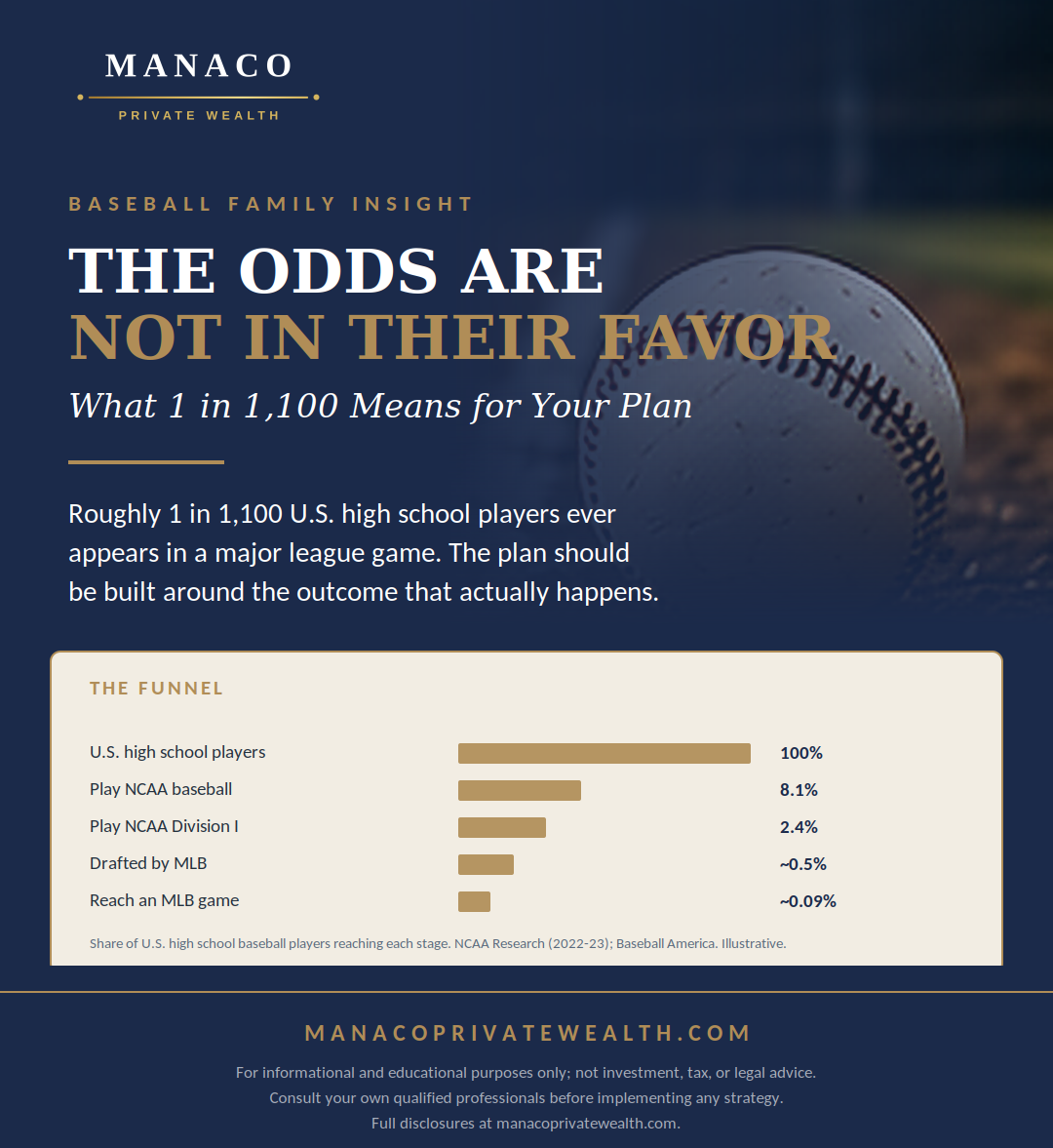
The single most important number in the paper is how few high school players ever turn professional. The odds should inform the plan, not discourage it: they argue for funding the 529 as though scholarships won't materialize, sizing recruiting spend to a player's realistic level, and treating the draft as upside layered on top.
The fork between the draft path and the college path is real, and the economics on each side are genuinely different: a signing bonus is a lump sum with a domicile decision attached, while a college scholarship is a multi-year package with NIL layered on top, taxed and timed differently. But a family doesn't get to wait until the fork arrives to start preparing. By the time a player is draft-eligible or committed, the travel-ball and recruiting years are already spent, and whatever financial habits a family built during that stretch are the foundation everything else rests on.
What won't change, regardless of how the three regulatory shifts shake out, is the underlying discipline: separating recruiting costs from investment costs, understanding the tax treatment of whatever money eventually shows up, and building toward long-term wealth that has nothing to do with baseball at all.
The game ends for every player at some point, usually much sooner than families expect — and the financial foundation built during the years of playing it is what's left standing after. - Frank Collado, Managing Director, Manaco Private Wealth
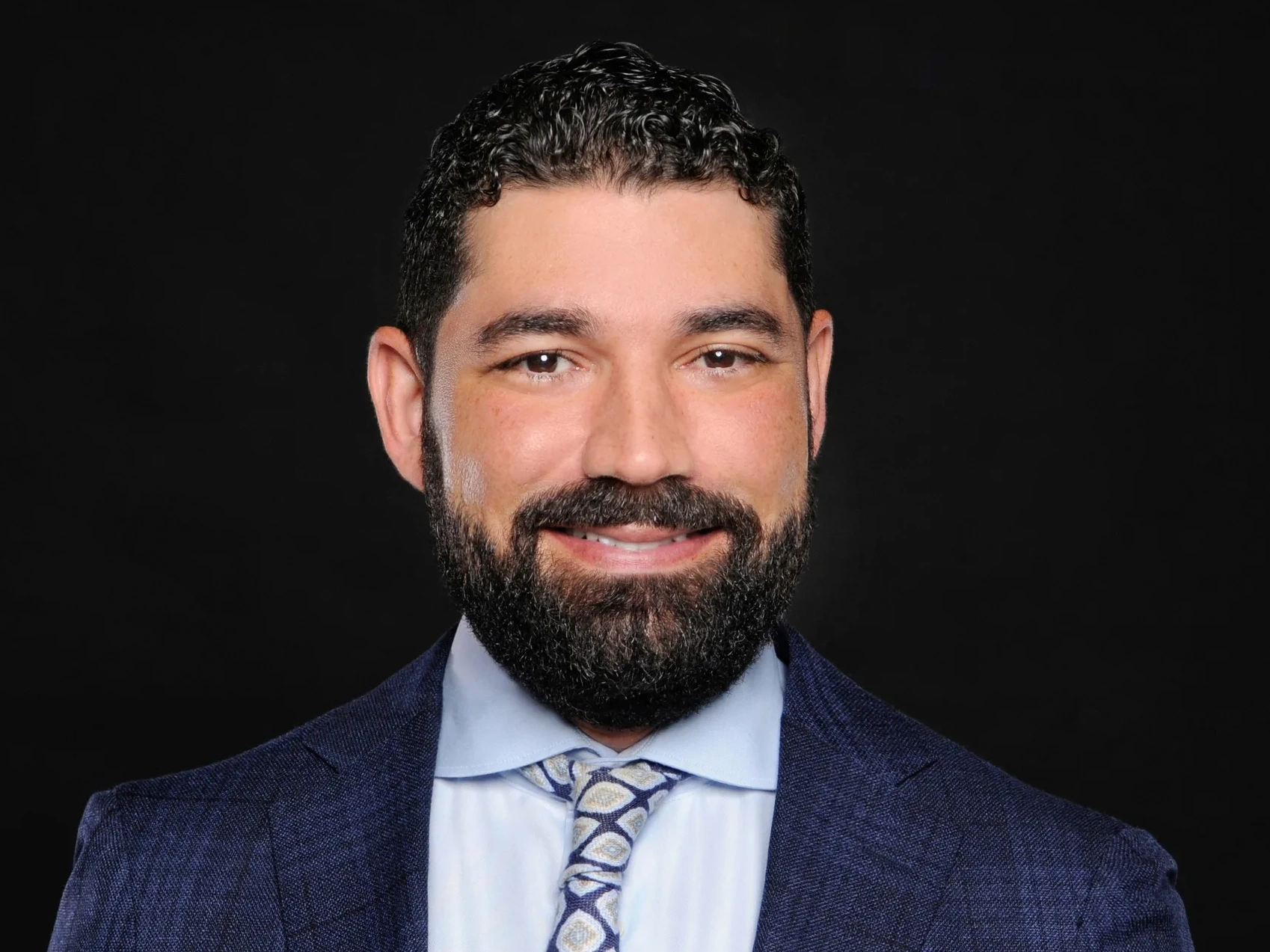
Frank Collado is Managing Director of Manaco Private Wealth, the "doing business as" entity through which he, an investment professional of Insigneo Securities, LLC and Insigneo Advisory Services, LLC, conducts securities and advisory activities, advising individuals, families, business owners, and executives on investment management and comprehensive wealth planning.
He is also a baseball dad. This paper grew out of that combination — a financial advisor's discipline grounded in a parent's lived experience writing checks for glove leather and gas money before any of it had a payoff — surfacing a gap that neither side alone would have caught.
Internal Revenue Service, guidance on NIL income taxation.
U.S. Department of the Treasury, Revenue Ruling 2004-109 on the tax treatment of signing bonuses.
The White House, Executive Order 14400, "Urgent National Action to Save College Sports," April 2026.
NCAA, official NIL reporting requirements; NCAA Research, Estimated Probability of Competing in College Athletics (2022–23).
College Sports Commission, roster-limit and House v. NCAA settlement implementation guidance.
MLB.com and USA Today, coverage of the proposed 2028 draft rule changes.
Baseball America, share of drafted-and-signed players who reach the majors, by round (1981–2010).
Tax Foundation, state individual income-tax rates used in the signing-bonus domicile comparison.
Every claim in the paper is cited inline with a direct link; full citations and the complete Methodology & Sources section are in the downloadable PDF.
If you're a baseball family working through any of the decisions in this paper — sizing travel-ball and recruiting spend, planning around a verbal commitment, structuring a signing bonus, or managing NIL income — I welcome the opportunity to speak with you.
The views and opinions expressed in this paper are those of the author alone and do not necessarily reflect the views of Insigneo, its affiliates, or its officers. This document is independent research and has been reviewed but not prepared or endorsed as an official publication of Insigneo.
This material is for informational and educational purposes only and should not be construed as investment, tax, legal, or accounting advice, or as an offer or solicitation to buy or sell any security or investment strategy. Strategies discussed - including signing-bonus domicile planning, NIL self-employment tax treatment, 529 education savings, and athlete-specific insurance - may not be suitable for every family or individual circumstance. Several regulations referenced (the MLB draft proposal and Executive Order 14400 in particular) were unsettled at the time of writing. Tax laws are subject to change and vary by individual circumstance. Manaco Private Wealth, Insigneo Securities, LLC, and Insigneo Advisory Services, LLC do not provide legal or tax advice; consult your own qualified tax and legal professionals before implementing any strategy discussed here. Full disclosures are included in the downloadable PDF and in the site footer below.